

Timber vs uPVC Windows in London: What's the Real Difference?
If you’re replacing windows in a London home, the choice between timber and uPVC comes up early, and often with good reason. uPVC is significantly cheaper to buy. Timber is significantly more expensive. So why do so many London homeowners, particularly those in period properties, choose timber? And is the premium always justified?
This guide gives you a straight comparison across the factors that actually matter: how the two materials look, how they perform thermally and acoustically, how long they last, what the planning rules mean in practice for each material, and what the real cost looks like when you account for the long term rather than just the upfront price.
Ayrton only makes timber windows, and while uPVC does represent a cost saving in most cases compared to timber, after 25 years of fitting timber windows across London and regularly replacing uPVC that builders installed to cut costs during renovations, we know what homeowners discover about that decision five, ten, and twenty years later.
Timber vs uPVC: Comparing the eleven most important consideration
The section below covers the main points of comparison across eleven factors. The sections that follow explore each one in more depth.
Aesthetics
Natural grain, depth, and warmth that cannot be replicated. Period-accurate profiles for Victorian, Georgian, and Edwardian homes. Paintable in any colour, refinishable.
Limited to a small range of moulded profiles. Woodgrain foil finishes are available but unconvincing at close range. Cannot replicate period profiles accurately.
Heritage & conservation suitability
The only material accepted by conservation officers for period-accurate replacement in London. Replacing timber on a like-for-like basis typically does not require planning permission.
Changing from timber to uPVC is likely to require planning permission and is generally not approved in conservation areas or listed buildings.
Thermal performance
Natural insulator. Ayrton windows achieve U-values of 1.3 W/m²K (double glazing) and 0.7 W/m²K (vacuum glazing). Precision draught-proofing as standard.
Adequate thermal performance at standard spec. Performance degrades as frames warp and seals deteriorate over time.
Acoustic performance
Strong acoustic performance. Acoustic glazing upgrade available. Dense timber frame provides marginal advantage over uPVC at comparable glazing spec.
Adequate acoustic performance. Same glazing upgrade options available to improve acoustic performance.
Longevity
60–100 years with proper maintenance. Glue-laminated Latvian redwood is dimensionally stable and highly resistant to moisture and movement.
10–35 years typically. Degrades, yellows, and becomes brittle over time — particularly in south-facing aspects exposed to UV.
Repairability
Can be re-glazed, re-sealed, repainted, and repaired at component level. Restoration rather than replacement.
Cannot be meaningfully repaired when degraded. Full unit replacement is the only option when performance drops.
Maintenance
Re-painting every 10-12 years in most cases. Ayrton’s 4-layer TEKNOS factory finish extends the cycle. Hardware lubrication annually.
Very low maintenance—wipe clean, no painting. But once discoloured or warped, condition cannot be recovered.
Property value
Associated with higher values in London’s period property market. Actively sought by buyers in conservation-area and heritage streets.
Can reduce saleability of period properties. On heritage streets, uPVC windows are a negative in the eyes of buyers and estate agents.
Planning permission
Like-for-like timber replacement typically does not require planning permission. Accepted in all planning contexts when correctly specified and replicating origianl features.
Changing from timber to uPVC is likely to require planning permission and is generally refused in conservation areas.
Environmental impact
FSC-certified sustainable timber. Long lifespan reduces replacement frequency. Ayrton recycles removed original window and door frames.
Fossil fuel-derived plastic. Shorter lifespan means more frequent replacement and more waste over a property’s lifetime. uPVC is not a sustainable or renewable resource.
Cost
Higher upfront. Long-term economics more favourable when lifespan, repairability, and property value are factored in.
Lower upfront. True cost of ownership over 30–40 years typically higher when replacement cycles and value impact are included.

Many of our clients want to preserve and replicate the original character and detailing of their existing windows. A large proportion of the work we undertake in London properties involves replacing original single-glazed timber windows that have deteriorated over time, while carefully retaining the traditional aesthetic and architectural features of the property.
Our clients are typically looking to combine the appearance of the original windows with the benefits of modern performance — including double glazing, improved thermal efficiency, enhanced security, and long-term durability. uPVC and aluminium systems are often unable to accurately replicate traditional frame profiles or deliver across all of these requirements, and they are generally not designed with the same longevity in mind — which is reflected in their lower cost point.
The most immediate difference between timber and uPVC is how it looks. In London, where the vast majority of housing stock dates from the Victorian, Edwardian, and Georgian periods, this is not a matter of personal taste alone — it is an architectural decision with consequences that extend beyond the homeowner’s front door.
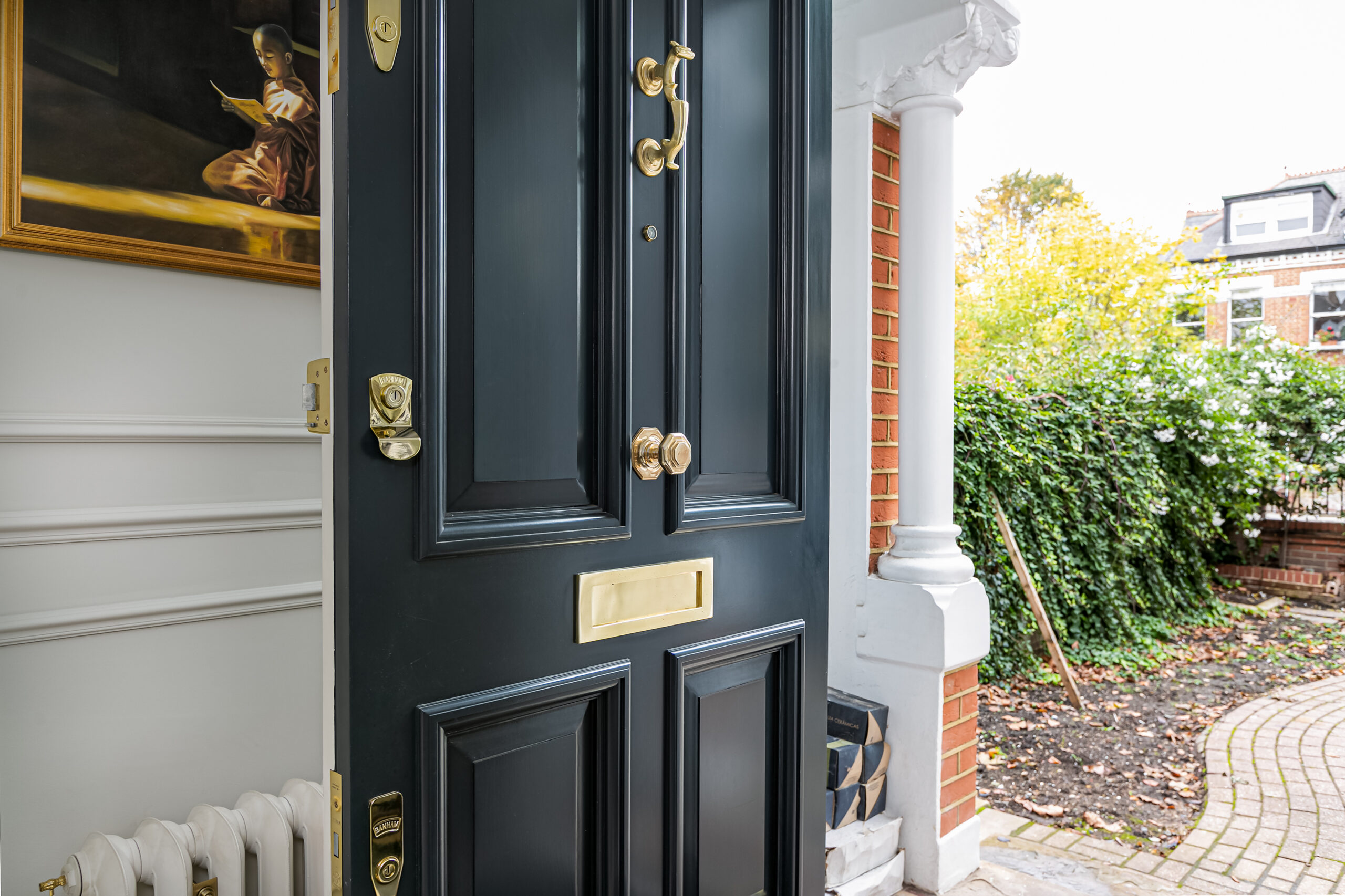
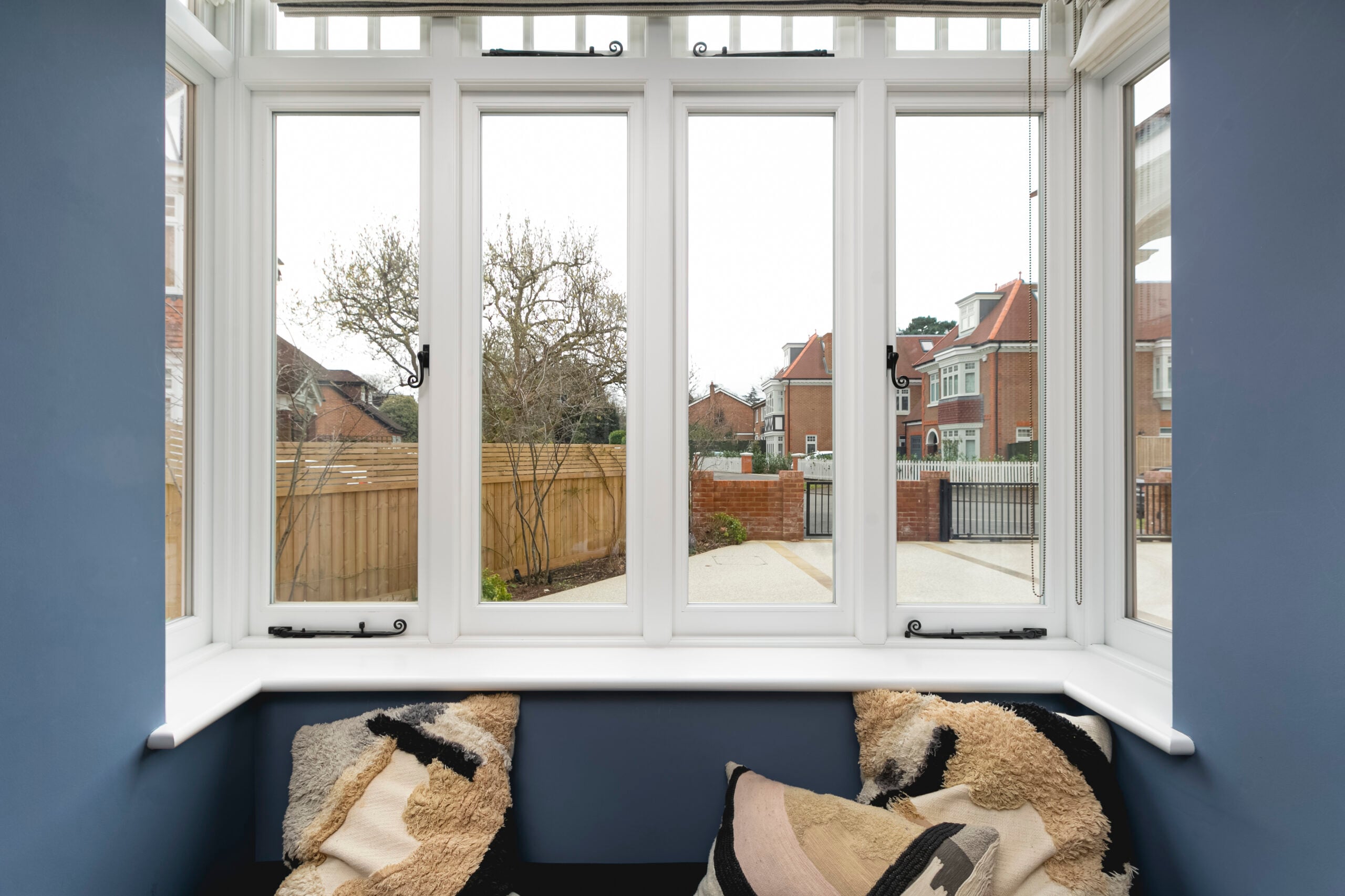
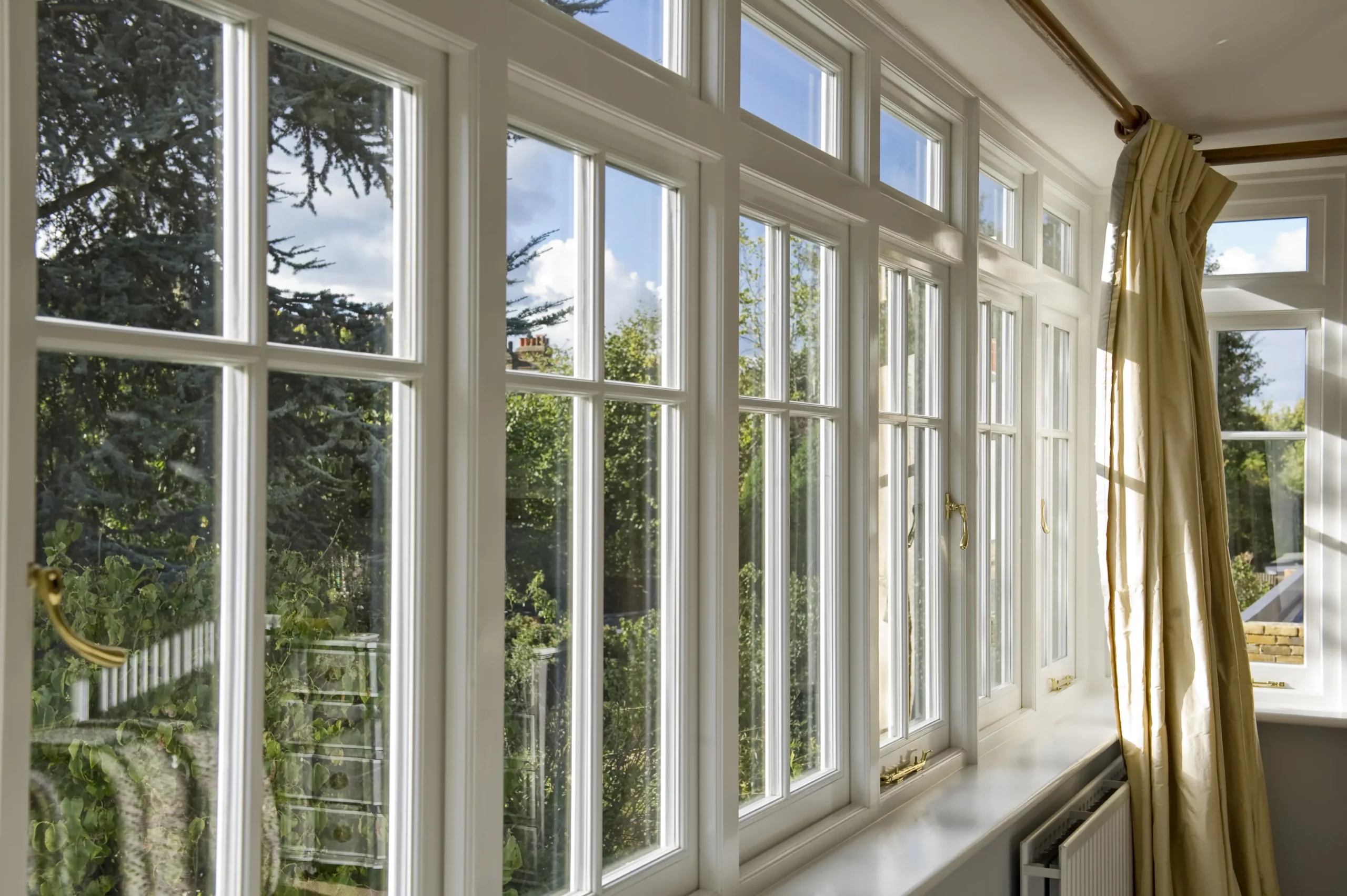
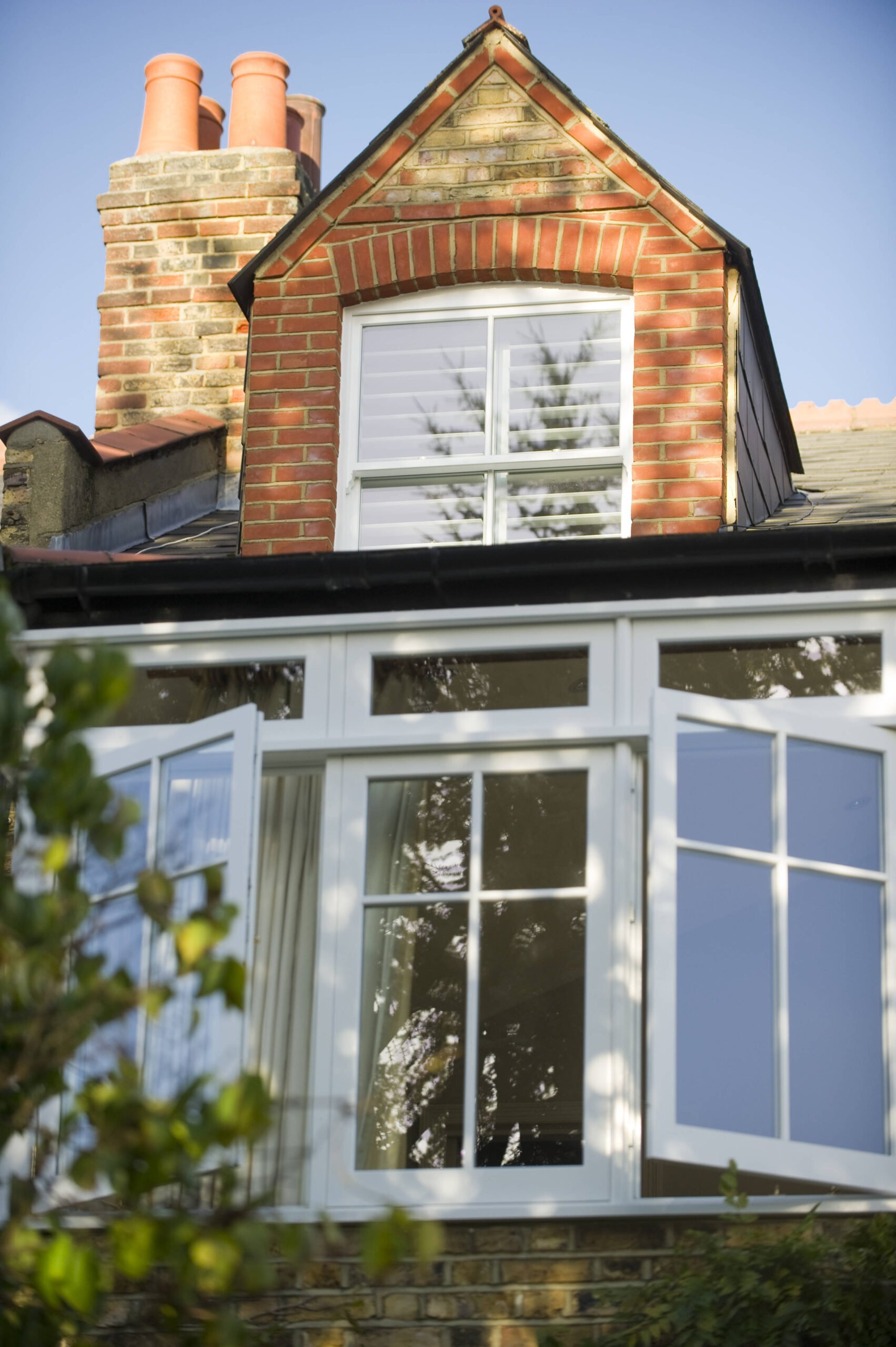
Timber windows can be designed to exactly replicate the original profiles of a period property: the glazing bar dimensions, the sash proportions, the horn details, the ovolo mouldings that give a Victorian sash or glazing bar its character. A well-made timber window in a London terrace looks like it belongs there because it is designed specifically to do so.
uPVC is manufactured in a limited range of standard profiles. Woodgrain foil finishes are available and have improved, but they cannot replicate the period profiles that define London’s terraced streets — and from the street, a uPVC window in a Victorian property is immediately identifiable as a replacement. Timber can be painted in any colour, and repainted in a different colour at any point in its life. The depth and warmth of a painted timber frame against London brick is something no synthetic material has come close to replicating.
For a significant proportion of London homeowners, the choice between timber and uPVC is shaped as much by planning rules as by preference. Nicholas explains how this works in practice:

The most common question we hear is, ‘Do we need planning permission to replace our windows?’ Many homeowners are understandably unsure, particularly if they live in a conservation area or own a period property. The good news is that, in most cases, planning permission isn’t required when you’re replacing timber windows on a like-for-like basis that complies with local conservation guidelines. Every local authority has its own requirements, so we always assess each project on a case-by-case basis and can advise homeowners accordingly.
Where planning permission is more likely to be needed is if you’re changing the appearance of the property — for example, replacing timber with uPVC, altering the window design, or changing the original colour. We generally advise against these changes, particularly on period properties, as retaining the building’s original character is usually the best approach both aesthetically and from a planning perspective.
This is a practically significant point that many homeowners miss. Replacing timber with uPVC is not a like-for-like change in the eyes of a planning authority. It is a change of material and, often, a change of profile and appearance. In conservation areas and listed buildings, it is unlikely to be approved. And in many London boroughs, Article 4 Directions mean that planning permission is required for window replacement regardless of the material chosen, at which point the specification matters enormously.
Helping homeowners navigate this is, as Nicholas puts it, all part of the service. Ayrton assesses each project on a case-by-case basis and advises from the outset, which means homeowners make informed decisions before committing to a specification, not after.
The quality of a bespoke timber window is determined not just by the design but by the materials used throughout its construction. Understanding the main choices and the differences between materials helps homeowners make better decisions and understand why costs vary between suppliers.
One of the most common misconceptions about timber windows is that they are inherently less energy efficient than uPVC. This was true of older, poorly maintained timber but it is not true of a modern, well-made bespoke timber window.
Timber is a natural insulator. Ayrton’s windows are manufactured using slow-growing Latvian redwood with a glue-and-laminate process that improves dimensional stability and reduces the shrinkage, warping, and draught gaps that made older timber windows perform poorly. Combined with precision-engineered draught-proofing and high-performance glazing, Ayrton timber windows achieve a U-value of 1.3 W/m²K as standard, competitive with any uPVC product at comparable specification.
For homeowners seeking the highest thermal performance, Ayrton’s vacuum glazing upgrade achieves a U-value of 0.7 W/m²K — significantly better than standard double glazing in any frame material, and particularly relevant for listed properties with planning limitations, for north-facing windows, or properties targeting EPC improvement.
uPVC performs adequately in thermal terms at standard specification. However, its performance degrades over time as frames warp and seals deteriorate — a process that accelerates in south-facing aspects. A uPVC window’s thermal performance at year 20 is meaningfully worse than at year one. A well-maintained timber window’s is not.
Acoustic performance is one of the most underappreciated factors in the timber vs uPVC comparison, and in London, one of the most practically significant.
London is a noisy city. Road traffic, public transport, and the ambient noise of dense urban living are daily realities for most homeowners, particularly those near transport corridors or on busy streets. The difference between a well-specified window and a poorly specified one can be the difference between a good night’s sleep and a bad one.
Timber is a naturally dense material that absorbs sound rather than transmitting it. Ayrton’s windows are available with acoustic glazing options, laminated glass that significantly reduces sound transmission which can be specified alongside any sash or casement design. For road-facing rooms, this is one of the most worthwhile upgrades available. Ayrton client reviews frequently mention the acoustic difference as one of the most immediately noticeable changes after installation.

The lifespan comparison between timber and uPVC is one of the most important parts of this debate, and the one most often misrepresented by upfront price comparisons.
A well-made bespoke timber window, properly maintained, can last up to 100 years. Ayrton’s windows are built from FSC-certified Latvian redwood using a glue-and-laminate process that improves dimensional stability, and are finished with a 4-layer TEKNOS factory paint system before delivery. The company backs this with a 10-year installation guarantee and extended component guarantees, including a 60 year guarantee against wood rot.
uPVC windows typically last between 10 and 35 years depending on specification and exposure. UV degradation causes yellowing and embrittlement, particularly in south-facing aspects, and warping of the frame reduces seal integrity over time. At the 20–25 year mark, most uPVC window installations require full replacement.
Timber can be re-glazed, re-sealed, repainted, and repaired at a component level. A damaged or worn timber window can be restored rather than replaced. When a uPVC window reaches the end of its performance life, there is no meaningful repair option, the entire unit is replaced, and the cost is incurred again.
Plenty! So often builders put in cheaper solutions to cut costs when doing home renovations. We often reinstate timber back into people’s homes when all other materials have been used, often to the detriment of the home’s aesthetic and character.
Maintenance: The Honest Answer
The maintenance question is the strongest genuine argument in favour of uPVC, and it deserves an honest answer.
uPVC requires very little maintenance. Wipe it down when dirty, lubricate the hardware occasionally, and it will function without further attention. There is no painting cycle, no risk of paint failure, no need to treat the frame.
Timber requires more. Ayrton applies a 4-layer TEKNOS factory paint system before delivery, primer, undercoat, and two topcoats, which is significantly more durable than a site-applied finish and extends the repainting cycle considerably. But the repainting cycle does exist. Depending on the aspect and exposure, an Ayrton timber window will typically need repainting every 10 to 12 years. We have plenty of examples where clients have not needed to repaint for 15 years or more, but of course it depends on how exposed they are and whether a client has kept them free of dirt and debris. Hardware should be lubricated annually. We have a maintenance guide to advise on how to care for the windows.
The question is not ‘which requires less maintenance?’ but ‘is the maintenance of a timber window a commitment I am willing to make in return for everything else it offers?’ For most London homeowners in period properties who care about how their home looks and performs, and who are thinking in decades rather than years, the answer is yes.
Property Value: Does the Choice of Window Material Affect What Your Home Is Worth?
In London’s property market, particularly in period housing, the choice of window material is not a neutral decision in terms of resale value.
Buyers in London’s premium residential market are familiar with the difference between timber and uPVC. A Victorian terrace in Islington or Clapham with quality bespoke timber sash windows is a more desirable property to this buyer profile than the same house with uPVC replacements. The effect is most pronounced on streets where the majority of properties have retained their original timber windows; a uPVC replacement stands out, and not in a way that helps the price.
For properties in conservation areas, the effect is more formal: uPVC installed without planning approval can result in an enforcement notice, a significant complication at the point of sale, and one that falls to the seller to resolve.
Cost: The Honest Long-Term Comparison
The upfront cost difference between timber and uPVC is real and significant. Ayrton’s bespoke timber windows carry a considerably higher initial price point, and we’re transparent about this.
The comparison that matters, however, is cost per year of ownership over the life of the window. A uPVC window installed today may need replacing once or twice in the next 40 years, at which point the product cost and the installation cost are incurred again. A timber window, properly maintained, may not need replacing in that timeframe at all. The accumulated cost of two or three uPVC replacement cycles at current prices can approach or exceed the initial cost of a well-made timber window.
As Olivia puts it, uPVC and aluminium systems are generally not designed with the same longevity in mind as timber, and this is reflected in their lower cost point. The price gap is not arbitrary: it corresponds to a real difference in how long each product is built to last.
The property value dimension adds a further layer. In London’s period property market, the premium associated with quality timber windows at sale is real. The discount associated with uPVC replacement on heritage streets is equally real. When property value is factored in, the long-term cost comparison often closes further than the upfront price difference suggests.
We completely understand that maintenance is a concern, particularly when homeowners have been led to believe that timber windows require a lot of upkeep. In reality, modern timber windows are far easier to maintain than many people expect.
Our windows are factory-finished with high-quality coatings designed to withstand the elements, and with the right care, they can last for decades. It’s also worth remembering that uPVC isn’t completely maintenance-free either – mechanisms, seals and hardware can still require attention over time.
For us, it’s about being realistic: timber does require some maintenance, but it shouldn’t be a constant chore. A little care over time can go a long way towards protecting what is a significant investment in your home.
Yes, absolutely. We’ve had plenty of clients come to us when preparing to sell, particularly where previous owners have replaced the original windows with uPVC. Often, an estate agent will flag the windows as something that could potentially put buyers off, which is what prompts the conversation.
It’s really about weighing up the investment against the potential value it can add. Replacing uPVC with well-made timber windows can transform the look of a property and significantly improve its kerb appeal – and when you’re selling, that first impression really does count.
We completely understand that the upfront investment can be a deciding factor. We’d never suggest that timber is the right choice for every budget, but we do encourage clients to look at the bigger picture rather than simply comparing the initial price.
With bespoke timber windows, you’re investing in a product that’s designed specifically for the property, built to last and, particularly with period homes, can preserve or enhance the character and value of the house. There’s also the longevity to consider – our timber comes with a 60-year anti-rot guarantee.
Ultimately, it’s about balancing the upfront cost against the quality, lifespan, appearance and long-term value of the product. For many of our clients, once they look at it that way, the additional investment in timber feels much more worthwhile.
When Is uPVC a Reasonable Choice?
Ayrton only makes timber windows, but honesty requires acknowledging when uPVC is, in fact, the more appropriate option.
uPVC is a choice for homeowners with a genuinely constrained budget who are not in a conservation area, listed building, or Article 4 zone, and for whom the aesthetic difference between the two materials is not a priority. It is also appropriate for outbuildings, utility spaces, and situations where longevity and visual quality matter less.
For period properties in London, particularly those in conservation areas or on streets defined by timber sash windows, uPVC is almost never the right answer. The planning risk is real, and it’s a shame when original timber windows are removed and replaced with materials or styles that don’t reflect the character of the property. In many cases, retaining or faithfully replicating the original design helps to preserve the architectural character of the home while also giving homeowners the performance and longevity they’re looking for.
The aesthetic impact is also real, and as Ayrton’s experience shows, the homeowners who install uPVC in these contexts often find themselves commissioning Ayrton to reinstate timber sometimes even 5 years or a decade or two later.
Which Is Right for Your London Home?
The timber vs uPVC decision becomes straightforward once you ask the right question: what do you want your windows to do for the next 10 to 40 years, and what does your property actually need?
If you’re in a conservation area, a listed building, or a period property on a street where the architecture is defined by timber windows, timber is almost certainly the right choice, both for planning and for long-term value. If you want windows that can be repaired, repainted, and maintained rather than replaced, timber is the right choice. If you are in a modern property without planning constraints and the upfront cost difference is the deciding factor, uPVC is a functional and adequate solution.
For the vast majority of the homeowners who contact Ayrton, the conversation is not about whether to choose timber, it is about which timber windows, at what specification, and at what budget. Ayrton’s team is happy to help with that conversation. There is still a lot of choice to ponder even when it comes to choosing the right timber supplier – there are many details that matter here too. The process begins with a free at-home design consultation, covering all London postcodes, with a fully itemised same-day quote and no obligation.
There are homeowners for whom uPVC will make more sense, but generally that comes down to their priorities rather than the quality of the product itself. If the overriding consideration is budget and they are looking for the cheapest way to replace their windows, then timber is unlikely to be the right solution for them.
We would also understand if someone simply doesn’t want to maintain timber. But if the property is a period home and preserving its character matters, we would strongly recommend timber. In those circumstances, uPVC is more of a compromise than a like-for-like alternative.
The biggest thing I’d encourage a homeowner to do is explore their options properly before making a decision. It’s very easy to compare windows on a screen or simply look at the price, but there is so much more to consider — the material, proportions, sightlines, finish, hardware and overall quality.
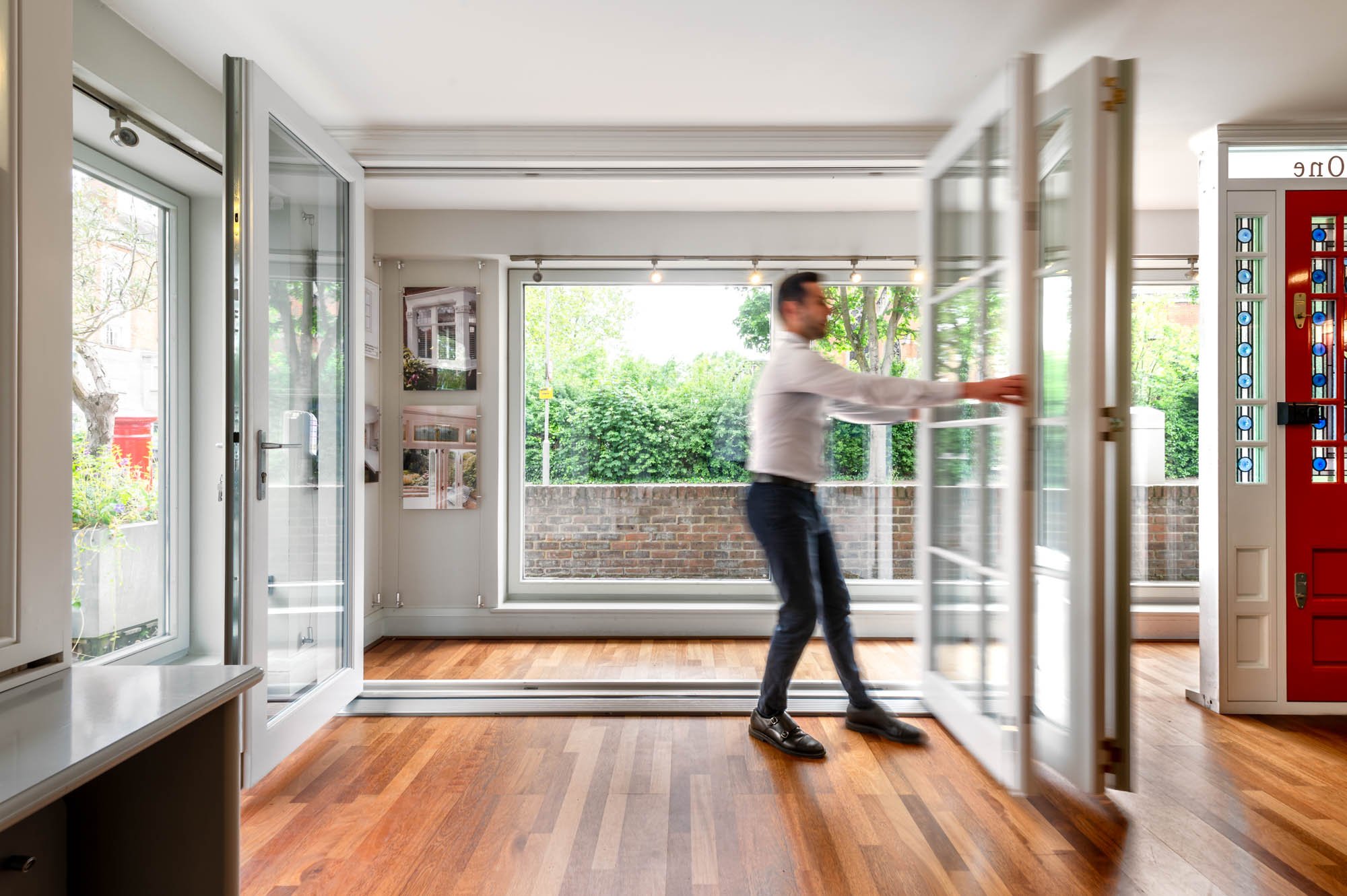
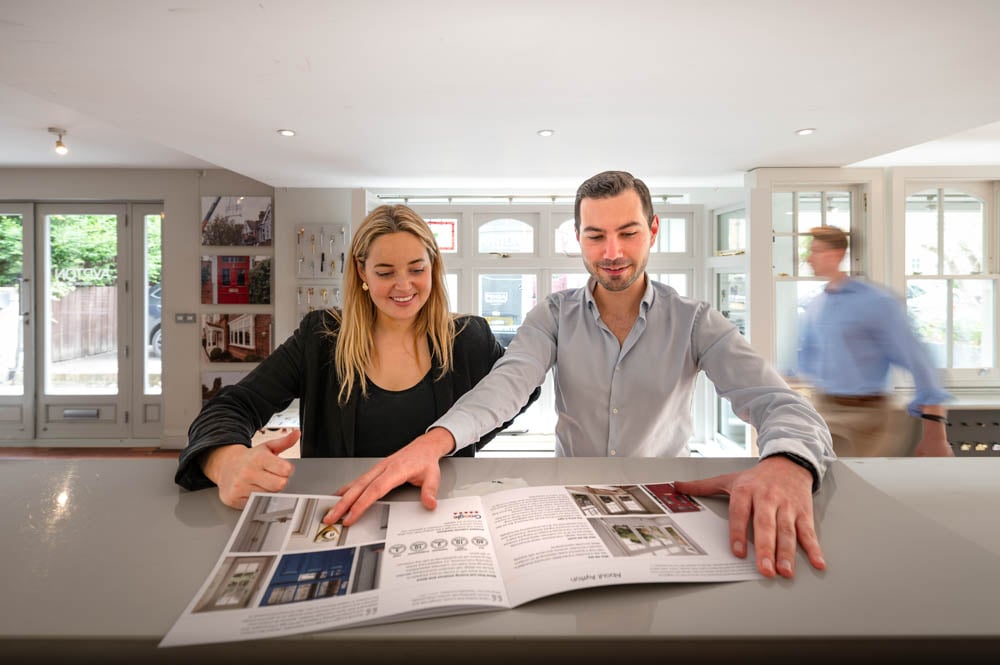
Come into a showroom, see the products in person, open and close them, look at the details and ask questions. Once you can see and feel the difference between the options, it becomes much easier to understand what you’re actually investing in and decide what is right for your home.Sometimes, simply seeing timber and uPVC side by side in person is enough to make the difference clear and help a homeowner understand why they might choose timber. Ultimately, it’s about seeing the options for yourself and making an informed decision about what is right for your home.
Why London trusts Ayrton Bespoke for made-to-order timber windows
For over 25 years, Ayrton Windows & Doors has designed, manufactured, and installed bespoke timber windows across London. The company holds FENSA, Accoya, and FSC certification, and has featured in the Evening Standard, Absolutely Magazines, Time & Leisure, and Nappy Valley Net.
What sets Ayrton apart is the model behind the work: design, manufacture, and installation all happen in-house, under one roof. There’s no third-party manufacturer, no subcontracted fitting crew, and no gap between the people who built the window and the people who install it; a rarity in the industry, and one that shows in the finished result.
Homeowners can see the full range in person at any of Ayrton’s four London showrooms—in Wandsworth, Dulwich, Crouch End, and Notting Hill—and book a free at-home consultation from there. Every London postcode is covered.
with one of the friendly
Ayrton team?
Our team will be happy to answer any questions you might have. Alternatively, why not pop into one of our showrooms to see our products in person, grab a coffee and talk through how to get the best for your home with one of our friendly design team.